
Why EP conveyor belt selection matters in bulk material handling
An EP conveyor belt is one of those components that looks ordinary until a line starts slipping, tracking badly, or shedding cover in a dusty plant. In a stone crusher or aggregate plant, the belt is not just a moving surface; it is the load-carrying link between the hopper, crusher, screen, stockpile, and truck loading point. When that link is wrong, everything downstream feels it.
For sourcing teams and maintenance engineers, the real question is not whether a conveyor belt can move material. It is whether the belt will stay stable under impact, carry abrasive product without unnecessary wear, and fit the conveyor’s operating conditions without creating avoidable downtime. That is where EP construction comes into the picture.
What EP construction usually means in practice
EP conveyor belt commonly refers to a polyester-nylon carcass structure, used in rubber conveyor belting for general industrial transport. The exact reinforcement on any given roll cannot be confirmed from a photo alone, but the EP category is widely chosen because it balances dimensional stability with flexibility. In plain terms, the belt can handle continuous movement while resisting excessive stretch under load.
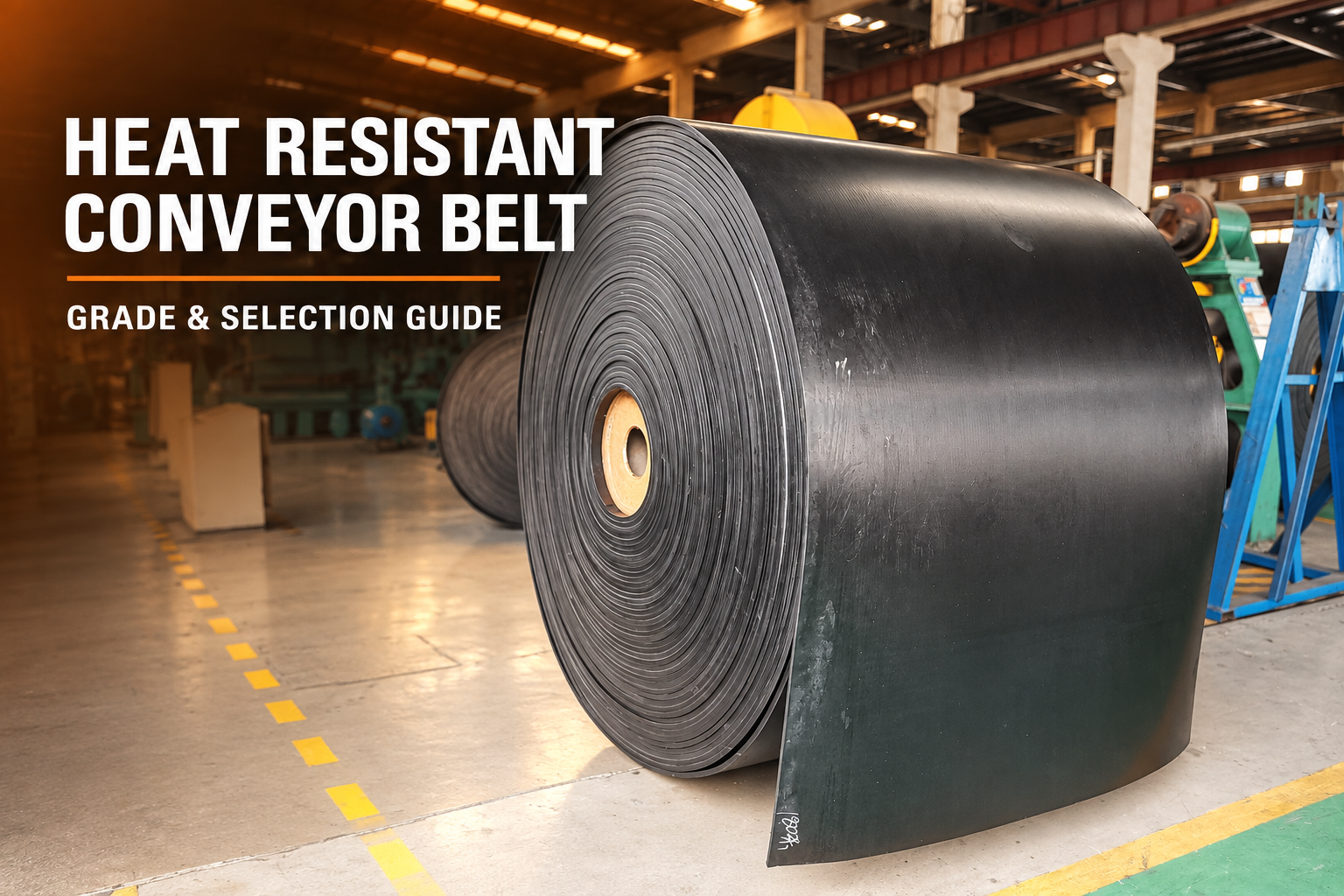
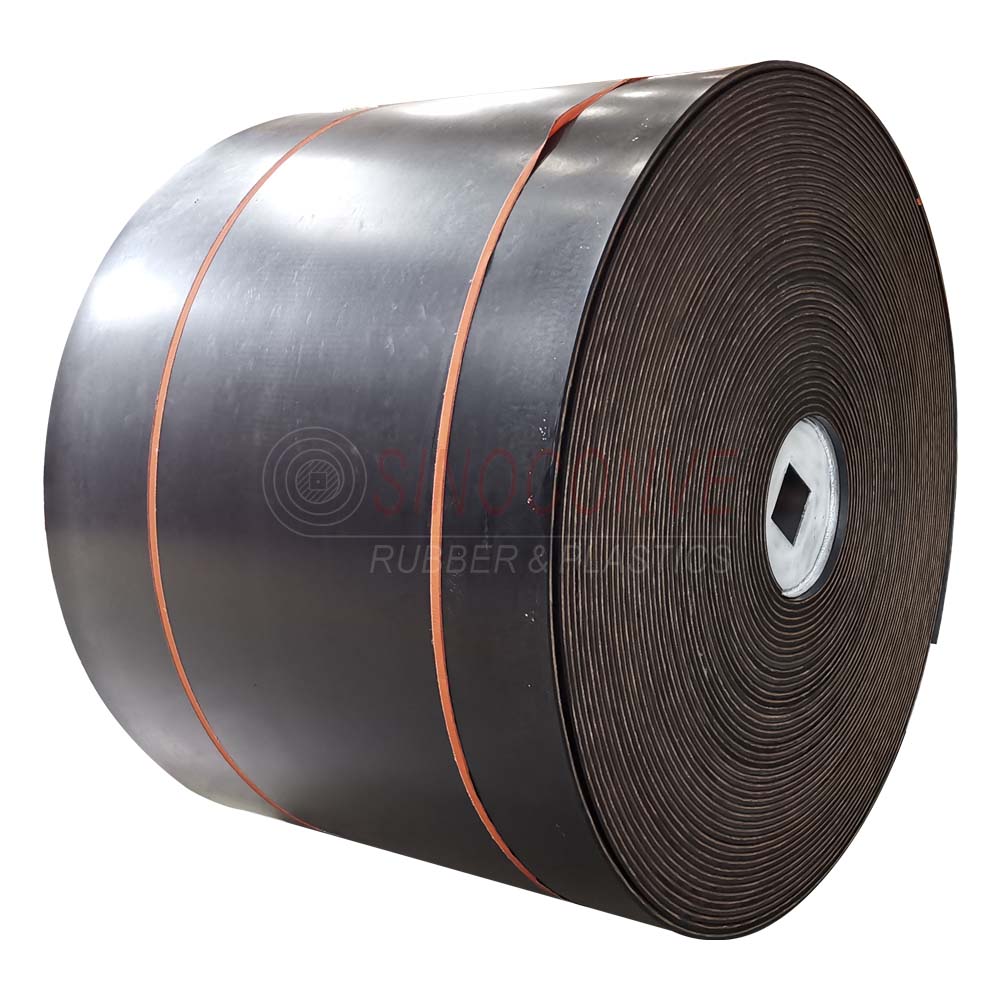
The product described here is supplied as a wide continuous roll with a dark black rubber surface and visible orange longitudinal stripes. That rolled format is typical for belt stock intended for cut-to-length supply, replacement work, or new conveyor installation. The smooth outer face suggests a conventional conveyor duty surface rather than a cleated or sidewall design.
Where this belt type is commonly used
EP conveyor belt products are widely used in mining, quarrying, agriculture, packaging, logistics, and general factory conveying. For the user searching around a stone crusher or aggregate plant, the fit is especially obvious. These sites deal with crushed rock, gravel, sand, and other abrasive bulk materials that punish belts through impact and surface wear.
In aggregate handling, the belt often runs over idlers at transfer points where spillage and misalignment show up quickly. In that environment, a belt with clear longitudinal stripes can be useful for visual tracking and inspection. Whether the stripes are functional or only identification depends on the supplier specification, so buyers should ask rather than assume.
Quick buyer takeaways before you quote or order
If you are comparing conveyor belt options, keep the decision grounded in operating conditions, not catalog language. The visible roll tells you very little about tensile rating, cover grade, temperature resistance, or abrasion performance. Those details matter more than appearance, especially in stone crusher service where sharp material edges and frequent loading can shorten belt life.
A practical way to approach the purchase is to define the conveyor’s duty first: material type, lump size, drop height, moisture, incline angle, and expected daily runtime. Then match the belt construction to that duty. A general-purpose belt may work well in a logistics line, but the same choice can be weak in a primary crushing feed system. That is the sort of mismatch that causes premature replacement.
Selection points that engineers should check
Carcass and stretch behavior
EP belts are often chosen when the buyer wants controlled elongation and stable tracking over long runs. That matters on longer conveyors and systems with recurring load cycles. If the belt stretches too much, tracking becomes a maintenance issue, and splice life can suffer.
Cover suitability
The visible black rubber cover suggests a standard industrial belt finish, but the actual compound is not shown. For aggregate plant duty, cover resistance to abrasion usually deserves more attention than color or surface sheen. If the conveyor carries sharp stone or recycled mineral feed, ask for the cover specification in writing.
Roll supply and installation
Roll form is convenient for storage and site handling, especially when belts are cut to length during shutdown maintenance. That said, large rolls are not a minor logistics item. Site access, lifting equipment, and splice planning should be confirmed before the belt arrives, otherwise the purchase turns into an installation delay.
Common mistakes buyers make
One common mistake is buying by width alone. Another is assuming a visually similar belt will behave the same in a crusher feed line. A belt for light bulk transport may look serviceable but fail too early in abrasive service. Buyers also sometimes overlook tracking aids and edge condition until after commissioning, which is usually the expensive moment to discover a problem.
There is also a tendency to focus only on initial cost. In conveyor systems, replacement labor, shutdown timing, and cleanup from spillage often cost more than the belt line item itself. That is especially true in aggregate plants, where access can be awkward and stoppages tend to ripple across the whole site.
Practical questions to ask the supplier
Before placing an order, ask for the exact belt construction, reinforcement type, cover grade, and intended service category. Confirm whether the orange stripes are for alignment, identification, or another purpose. If the belt will run in a stone crusher or aggregate plant, ask how the product is typically specified for abrasion-heavy service and whether the supplier can support cut-to-length supply.
It is also worth asking how the belt should be stored before installation. Rubber conveyor belting can be damaged by poor storage, and that is a preventable problem. A belt that sits badly wound, exposed to heat, or handled roughly on site can arrive in perfect-looking condition and still create trouble later.
FAQ
Is an EP conveyor belt suitable for quarry use?
Often yes, provided the belt construction and cover grade match the abrasion and impact duty. Quarry and aggregate applications are common use cases for this belt family.
Can the orange stripes be used for tracking?
They may help with visual alignment, but buyers should not assume that without confirmation from the supplier. The stripes could also be identification marks.
Can this belt be used for new installations and repairs?
Yes. Roll supply makes it suitable for both planned replacement and new conveyor builds, as long as the system requirements are clearly defined.
Next step for buyers
If you are sourcing for a stone crusher, aggregate plant, or other bulk handling line, start with the conveyor duty summary and request a belt specification that matches it. The right EP conveyor belt is not the one that looks toughest in a photo; it is the one that fits the material, the machine, and the maintenance plan without creating a second problem six weeks later.