
Classic V Belts vs Cogged: SINOCONVE's solutions
Not every pulley drive needs the newest belt design. Some machines run for years with a standard wrapped belt: a workshop fan, a water pump, a slow agricultural drive with enough room around the pulleys. In that kind of setup, a classic v belt is still a sensible choice.
Problems usually show up when the drive becomes tighter, hotter, or less forgiving. The belt bends around a smaller pulley, slips during start-up, then starts to glaze on the sidewall. A mechanic tightens it once. Then again. After a while the belt is not really the problem anymore; the match between belt and drive is.
That is why buyers often search classic v belt contrast cogged v belt before replacing a drive belt. The two belts may sit in the same V-groove, but they do not handle bending and heat in exactly the same way.
What a Classic V Belt Does Best
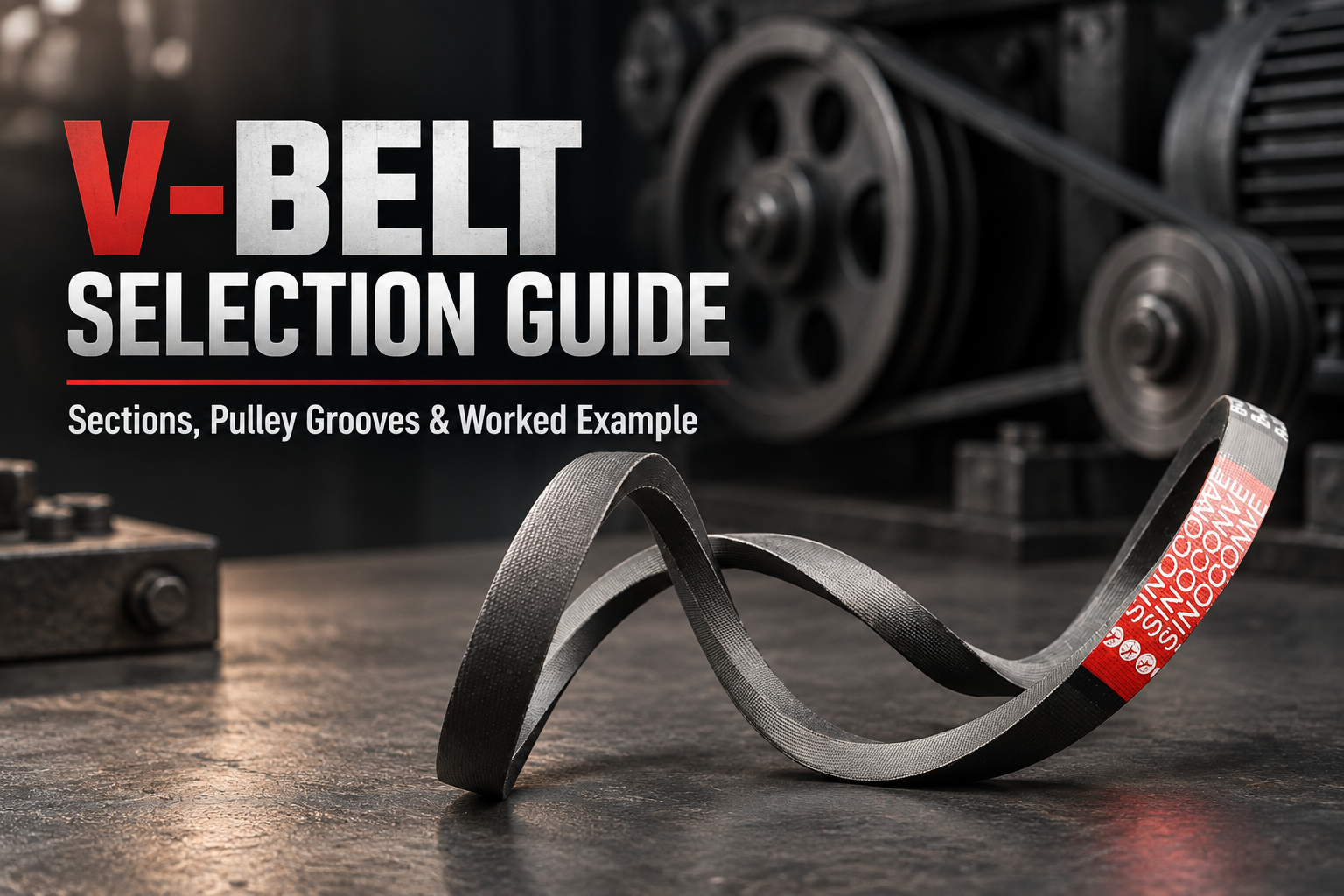
A classic v belt transfers power through side contact. Its wedge shape presses into the pulley groove, so the belt does not rely on teeth or positive engagement. It is simple, repair-friendly, and widely used in motors, pumps, compressors, fans, agricultural machines, and general industrial drives.
Classic sections such as A, B, C, D, and E are often selected when pulley size is reasonable and the load is fairly steady. The wrapped cover protects the belt body, while internal cords control stretch. When alignment is correct, a classic v belt can be a cost-effective transmission belt with stable service life.
It does have limits. On compact drives, or where speed and temperature are higher, the belt can build heat during repeated bending. Once the rubber hardens or the side contact becomes polished, slipping and noise are not far behind.
Classic V Belt Contrast Cogged V Belt: The Real Difference
A cogged v belt is still a V-belt. The cogs on the inner side are not timing teeth. They help the belt bend.
That matters because bending creates heat. A cogged structure reduces internal stress as the belt moves around the pulley, especially on smaller pulley diameters. For machines that run long hours, or drives that already show heat marks, a cogged v belt may last better than a wrapped classic belt.
|
Belt Type |
Good Fit |
Watch Point |
|
Classic v belt |
General drives, larger pulleys, steady load |
Less flexible on tight layouts |
|
Cogged v belt |
Small pulleys, higher speed, warmer duty |
Needs clean pulley contact |
|
Wrapped V-belt |
Dusty or rough handling areas |
Can run hotter under sharp bending |
|
Raw-edge cogged belt |
Better flex and heat release |
Check groove wear first |
Where SINOCONVE's Range Fits
SINOCONVE supplies V-belt products for automotive, agricultural, and industrial power transmission use. The practical value is not only offering both classic and cogged types, but helping buyers avoid a wrong replacement.
A classic v belt works well in many ordinary drives. A cogged v belt becomes more attractive when the old belt shows glazing, cracking, heat hardening, or repeated tension loss. If oil, dust, outdoor exposure, or anti-static requirements are involved, the compound and cover design should be checked before ordering.
How Buyers Should Choose
Do not start with the product photo. Start with the machine.
|
Check Before Ordering |
Why It Matters |
|
Belt section and length |
Prevents wrong fit |
|
Pulley groove condition |
Controls side grip |
|
Pulley diameter |
Affects flexing stress |
|
Load pattern |
Steady load or shock load |
|
Heat, oil, dust |
Guides compound choice |
|
Old belt code or sample |
Speeds matching work |
For buyers comparing classic v belt contrast cogged v belt, the safest rule is simple: keep the classic type where the drive is stable; consider the cogged type where heat, tight bending, or frequent adjustment is already a problem.
FAQ
Is a cogged v belt the same as a timing belt?
No. It still works by friction in a V pulley. The inner cogs help flexing; they do not control timing.
When should I keep using a classic v belt?
When pulley size, load, and belt life are already acceptable. Not every drive needs a cogged upgrade.
Why does a cogged v belt often run cooler?
Because the inner notches reduce bending resistance as the belt turns around the pulley.
What information helps SINOCONVE quote faster?
Send belt code, section, length, width, quantity, application, and photos of the old belt or pulley if possible.
Final Note
A belt should be chosen around the drive, not around a catalog description. For stable, standard duty, a classic v belt remains a reliable transmission belt. For hotter or more compact drives, a cogged v belt may reduce adjustment work and early wear. That is the useful classic v belt contrast cogged v belt decision for most buyers.