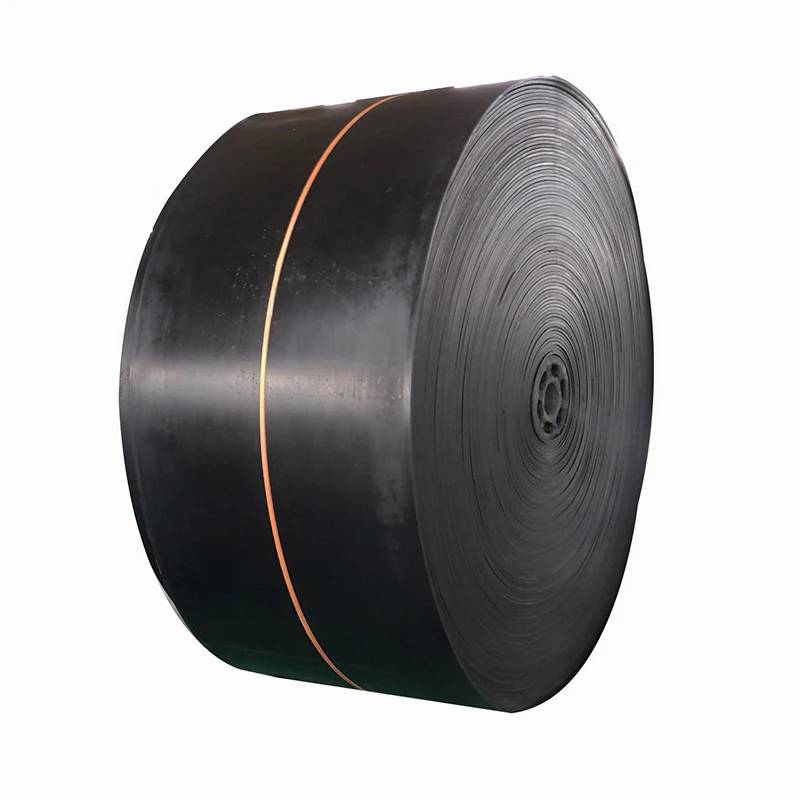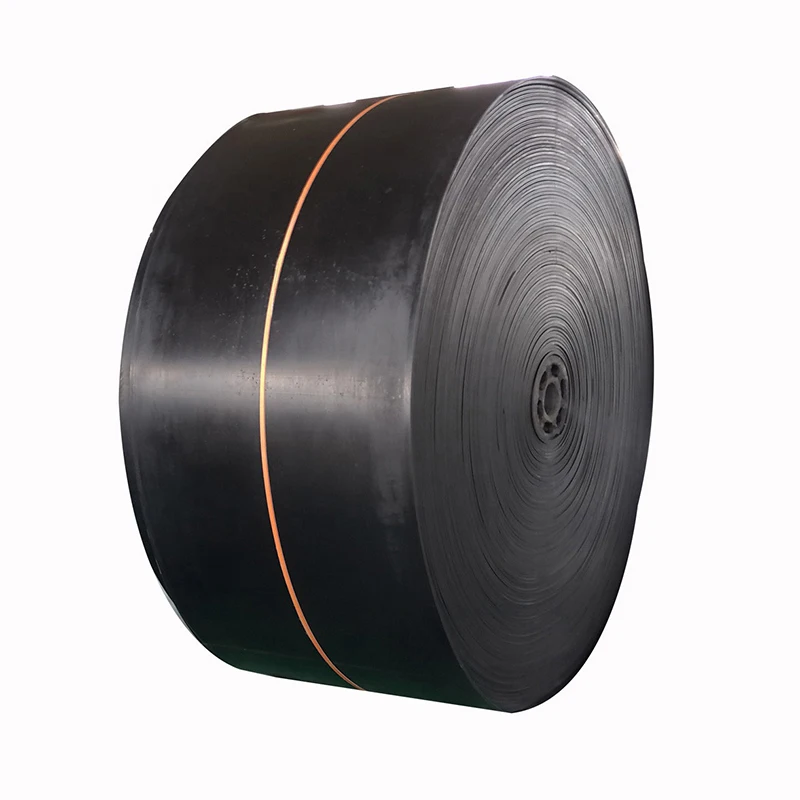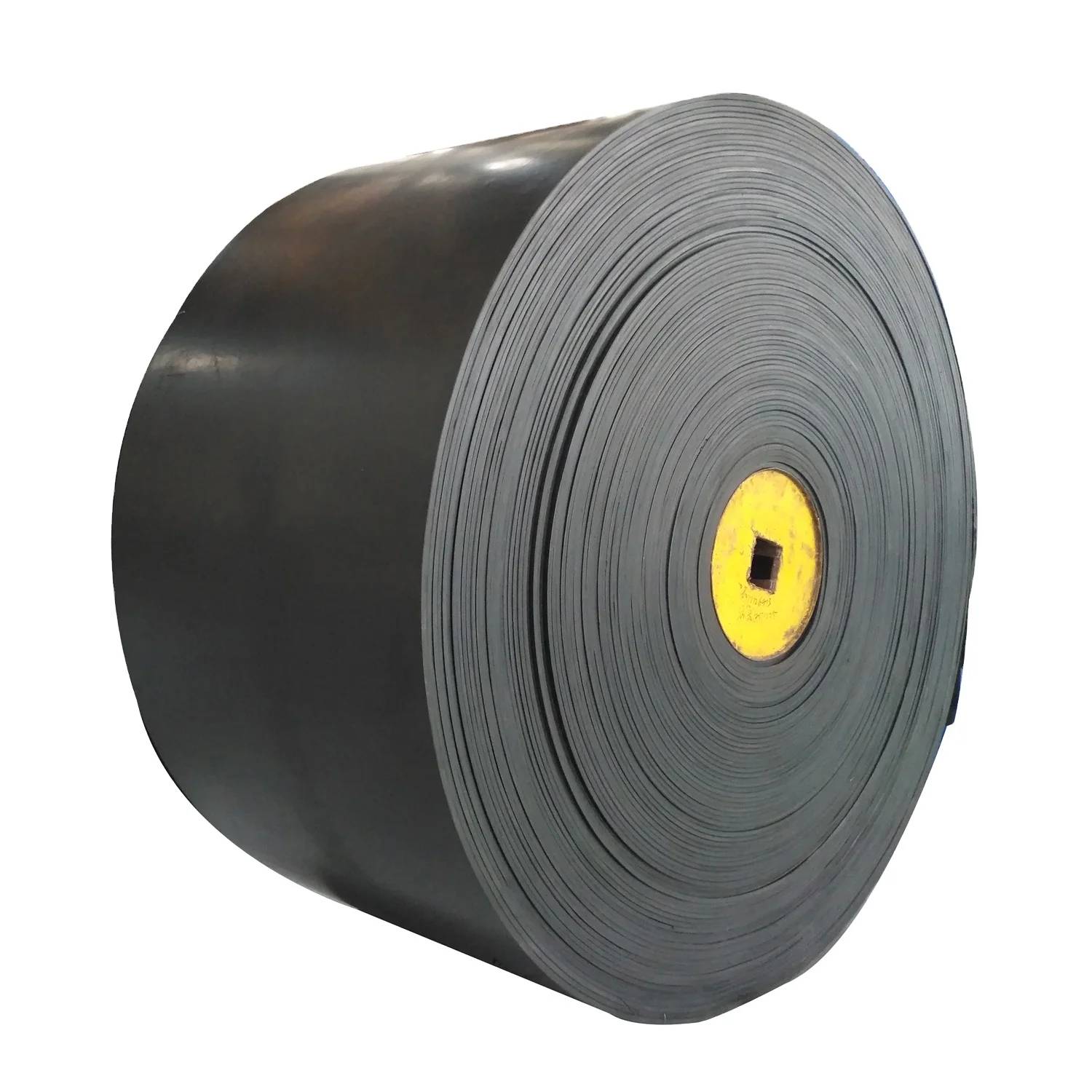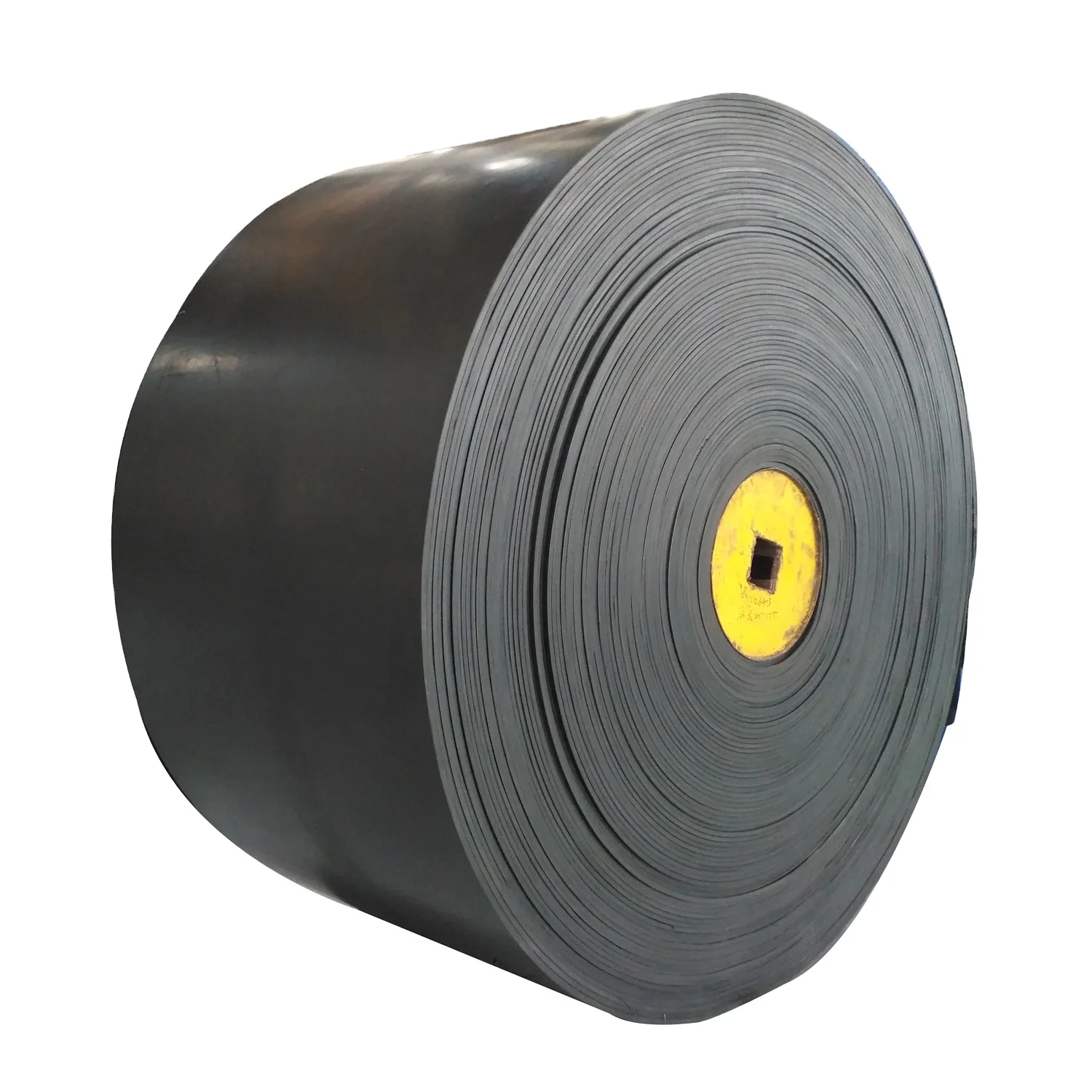



Heat-Resistant EP Fabric Mining Conveyor Rubber Belt
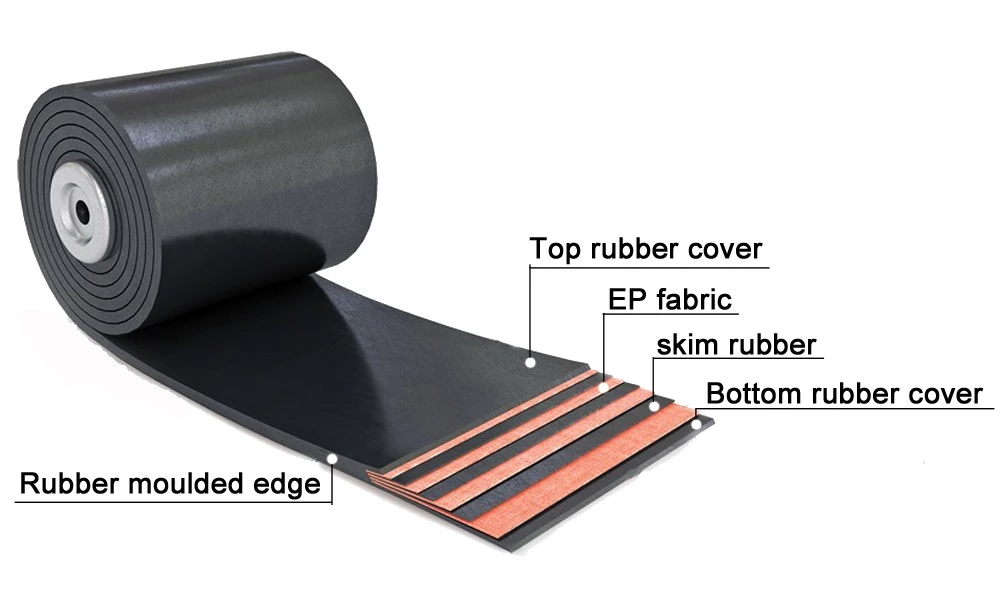
This is a heat-resistant EP fabric mining conveyor rubber belt designed for high-temperature industrial applications where the conveyed material temperature exceeds the operating limits of standard abrasion-resistant rubber. The belt uses a multi-ply EP (polyester-nylon) carcass combined with a heat-resistant cover rubber compound (T1 or T2 grade) to maintain structural integrity and cover adhesion when handling hot materials such as cement clinker, metallurgical coke, sintered ore, foundry sand, and hot aggregate.
Material temperature is the single most important variable for selecting a heat-resistant belt. Using a standard rubber cover with hot material causes rapid cover cracking, ply separation, and belt failure. Using a heat-resistant compound at the correct grade prevents this and extends belt service life. Send us your material temperature, conveyor dimensions, and material data and our team will confirm the appropriate heat-resistant grade and full belt specification.
Get a faster, more accurate quote
Click Inquiry Now and include the material type, expected material temperature range (°C), conveyor width, length, incline angle, belt speed, and quantity. Providing the maximum peak temperature is important for compound selection.
Heat-resistant grade guide
| Cover Grade | Typical continuous temp. | Typical max peak temp. | Typical applications |
| Standard (no HR) | Up to ~60°C | 80°C | General mining, aggregate, cold material conveying |
| T1 Heat Resistant | Up to ~120°C | 150°C (brief) | Cement clinker (cooled), warm coke, hot sand, foundry applications |
| T2 Heat Resistant | Up to ~150°C | 180°C (brief) | Hot clinker, sinter ore, hot ash, high-temperature metallurgical by-products |
| T3 / Super HR | Confirmed to conditions | 200°C+ (confirmed) | Extreme-heat applications — must be confirmed against specific material temp. |
Temperature limits in the table are indicative. Actual performance depends on material contact area, belt speed (contact duration), and ambient conditions. The appropriate grade must be confirmed against your measured material temperature before production.
Material and application note
This product is positioned for high-temperature mining and industrial conveying using a heat-resistant EP fabric belt. The correct cover grade must be selected based on your measured material temperature, not the belt's listed temperature range alone. No guarantees of belt life at specific temperatures are made without confirming the full operating conditions.
Why heat-resistant cover compound is critical for high-temp material
Prevents thermal degradation of the rubber cover
Standard rubber compounds begin to soften and crack when the material temperature consistently exceeds 60–80°C. This leads to cover separation, ply exposure, and accelerated belt failure. Heat-resistant compound uses a different rubber formulation (typically modified SBR or EPDM-based) that maintains its mechanical properties and adhesion to the EP fabric carcass at elevated temperatures.
Maintains carcass integrity
High temperatures do not just damage the cover surface — they also reduce the adhesion between the rubber and the EP fabric plies, eventually causing delamination. Using the correct heat-resistant compound preserves the rubber-to-fabric bond throughout the belt's service life, even under repeated thermal cycling from hot loading and cooler return passes.
EP carcass — stable at elevated temperatures
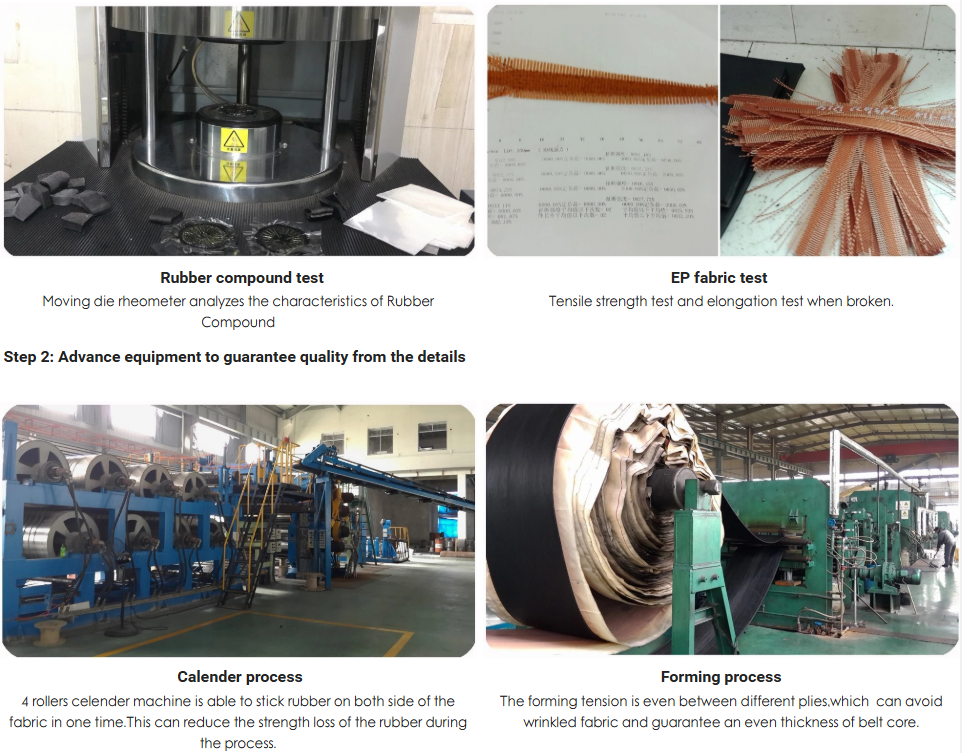
Polyester-nylon fabric retains dimensional stability and tensile strength better than some alternative carcass materials under moderate heat. For the temperature ranges addressed by T1 and T2 compounds, an EP carcass with the correct heat-resistant cover is an established and reliable solution.
Application details we check
- Material type (clinker, coke, sinter, hot ash, hot sand, other) and the measured or estimated material temperature at the loading point — the primary input for grade selection.
- Whether the temperature is continuous or peak (brief spikes to higher temperatures) — peak temperature drives the grade selection.
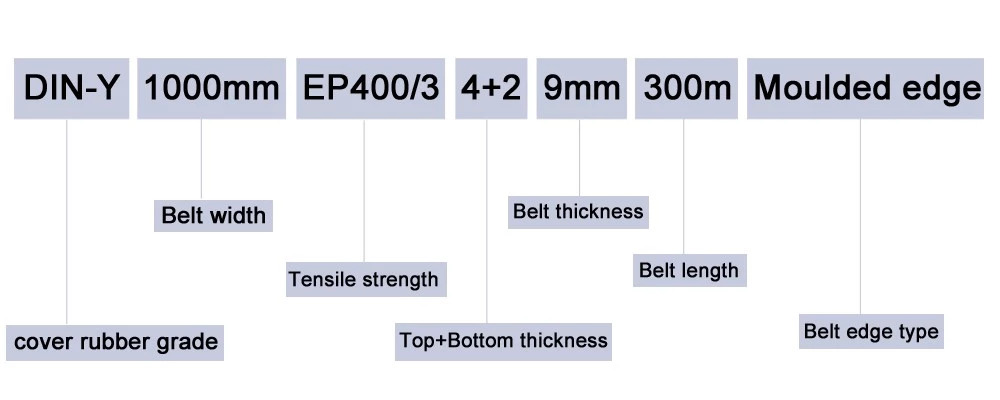
- Belt width, center-to-center length, and incline angle — used to calculate belt strength and select EP grade.
- Drive and tail pulley diameters and belt speed — constrain ply count and carcass flexibility.
- Ambient temperature around the conveyor and ventilation — the surrounding environment adds to the thermal load on the belt.
- Splice method and quantity required.
Customization discussion
Cover grade (Standard / T1 / T2 / T3), EP grade (EP100–EP500), ply count, belt width, belt length, top and bottom cover thickness, and splice preparation can be discussed. All specifications are confirmed against your measured material temperature and conveyor data before production.
Get a technical recommendation and quote
Click Inquiry Now and send your material temperature data and conveyor dimensions.
Suggested inquiry: "Please quote a heat-resistant EP conveyor belt — material [clinker / coke / other], material temperature at loading: continuous [ ]°C / peak [ ]°C, belt width [ ] mm, length [ ] m, quantity [ ] meters."
Frequently asked questions
How do I know if I need T1 or T2 grade?
Measure or estimate the surface temperature of the material at the belt loading point. If the continuous temperature is up to 120°C with brief peaks to 150°C, T1 is typically appropriate. If the continuous temperature reaches 150°C with peaks above that, T2 is required. Provide both the continuous and peak temperatures in your inquiry and we will confirm the grade.
Can a heat-resistant belt also be abrasion-resistant?
Heat-resistant compounds are formulated primarily for temperature resistance; their abrasion resistance is lower than standard wear-resistant compounds. For applications combining high temperature and high abrasion (such as hot clinker with sharp edges), the belt specification requires balancing both properties — share your conditions and we will advise on the best available compound.
What happens if I use a standard belt on hot material?
Standard rubber begins to lose hardness and adhesion above 60–80°C, causing the cover to soften, blister, and eventually delaminate from the carcass. This dramatically shortens belt life and increases replacement cost and downtime. Using the correct heat-resistant grade from the start is more cost-effective than replacing standard belts at reduced intervals.
How do I submit an inquiry?
Use the Inquiry Now link to open our contact page at https://sinoconve.com/contact-us and include your material type, temperatures, belt dimensions, and quantity.