
What Buyers Usually Mean by a White Rubber Conveyor Belt
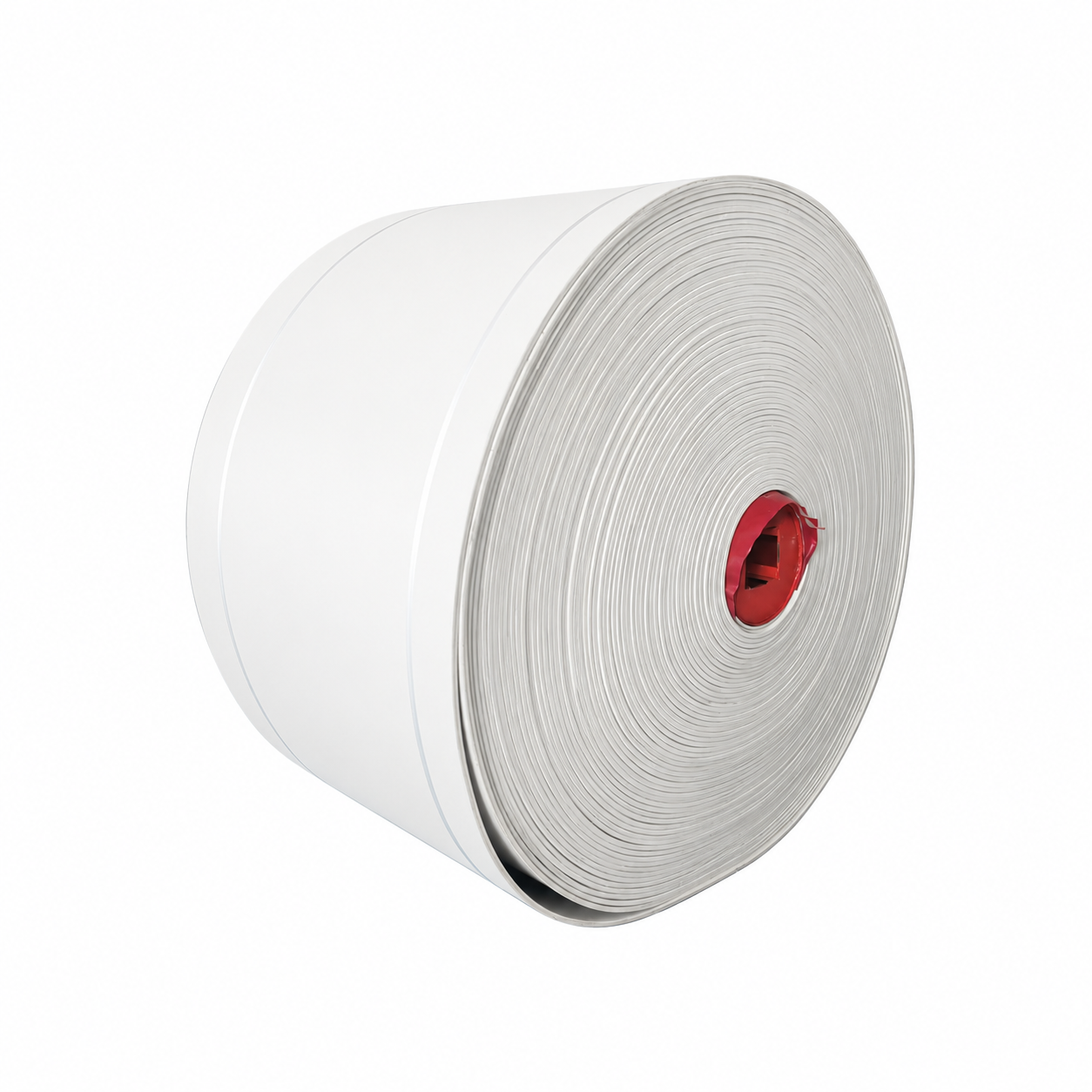
A white rubber conveyor belt is not just a color choice. In many factories, the white surface signals a cleaner working profile, easier visual inspection, and a belt that fits into processes where product appearance matters. That is why buyers searching for a white rubber conveyor belt are often trying to solve a practical problem: how to move product reliably without marking it, contaminating it, or making defects harder to see.
The term also gets used a little loosely. In some plants, people may mean a white food grade belt, a white belt for clean handling, or even a white conveyor surface used in packaging, textile, or paper lines. The right choice depends less on the color itself and more on the belt construction, rubber compound, and operating environment.
Where White Conveyor Belts Tend to Be Used
White surfaces show up in sectors where cleanliness and visibility matter. Food processing is the obvious one, but that is not the only case. Packaging lines, light assembly, pharmaceuticals, and some chemical industry applications also use white or light-colored belt surfaces when operators need to spot residue, carryover, or product defects quickly.
In food handling, the appeal is straightforward: the belt can make crumbs, flour, oil, and discoloration easier to notice during routine checks. In the Chemical Industry, the requirement is usually different. Buyers may want a white belt for visual control in a controlled process, or to reduce the risk of dark pigment transfer onto sensitive materials. That said, chemical compatibility still comes first; a white surface does not automatically make a belt suitable for aggressive exposure.
What to Look at Before You Specify One
The most common buying mistake is choosing by appearance and stopping there. Color is only one variable. The belt has to match the loads, product characteristics, cleaning method, and transfer points on the line.
Surface behavior
A white belt should give operators enough visibility to inspect product condition, but the surface also has to move the product predictably. Too much grip can be a problem with delicate wrapped goods; too little can cause slippage on inclines or at startup.
Cleaning and hygiene expectations
If the belt is meant for food grade use, buyers should check the hygiene design of the whole system, not only the belt cover. Washdown routines, splice style, edge sealing, and resistance to repeated cleaning all matter. A white belt can make cleaning issues easier to see, but it does not solve them.
Mechanical duty
Conveyor belts fail for boring reasons: too much tension, poor tracking, harsh transfers, or a mismatch between belt compound and duty cycle. For buyers, the useful question is whether the belt is being asked to carry cartons, trays, loose product, or abrasive bulk material. Those are different jobs.
How the White Belt Fits Into Wider Web Handling and Conveyor Decisions
Some buyers come to the topic from conveyor work, while others are really dealing with roll-to-roll processing. The product image in this case points to wide web handling: a large continuous sheet being unwound and guided across rollers in a converting line. That is a useful reminder that “white belt” and “white web” are not interchangeable terms, even if both are part of material transport.
For web processing equipment, the priorities are tension control, roller alignment, and stable feeding. For a conveyor system, the priorities may be friction, sanitation, incline performance, and impact resistance. If your line includes both, the belt and the handling equipment need to be selected together.
Common Buyer Errors
One frequent error is assuming food grade means universally safe for every contact situation. It usually does not. Another is underestimating how much a white surface will reveal. On one hand, that helps inspections. On the other, it can make staining, wear, and buildup more obvious, which is good for maintenance but sometimes surprises operations teams.
A second mistake is forgetting the real environment. Heat, oil, sugar, cleaning chemicals, and abrasion all change belt life. The white color should not distract from the operating conditions.
Quick Selection Questions
Before specifying a white rubber conveyor belt, ask:
Is the application in food handling, packaging, light industrial work, or the Chemical Industry?
Does the belt need to prioritize hygiene, visibility, grip, or chemical resistance?
Will it carry packaged products, loose materials, or continuous sheet stock?
How often will it be cleaned, and with what agents?
Are there transfer points, guides, or rollers that may affect tracking and wear?
These questions narrow the field quickly and prevent a mismatch that looks minor on paper but becomes expensive on the floor.
Practical Takeaway for Buyers
If you are comparing a white rubber conveyor belt with other belt options, treat the white surface as a functional feature, not a finish detail. In food grade and Food-related lines, it can support inspection and housekeeping. In broader industrial use, it can improve visibility and reduce the chance of unwanted marking. But the real decision still rests on compound selection, mechanical duty, and how the belt will behave after months of production, not just on day one.
If you are planning a new line or replacing an existing belt, start with the product characteristics, the cleaning method, and the conveyor geometry. Then confirm whether the white belt is serving a real process need—or only a visual preference. That small distinction saves trouble later.