
What a V Belt Does in a Drive System
A v belt is a small part, but a machine often gives it away when the belt is wrong. A fan slows down. A pump loses output. A motor begins to squeal on start-up. The belt is not always the only cause, but it is one of the first places a maintenance worker will check.
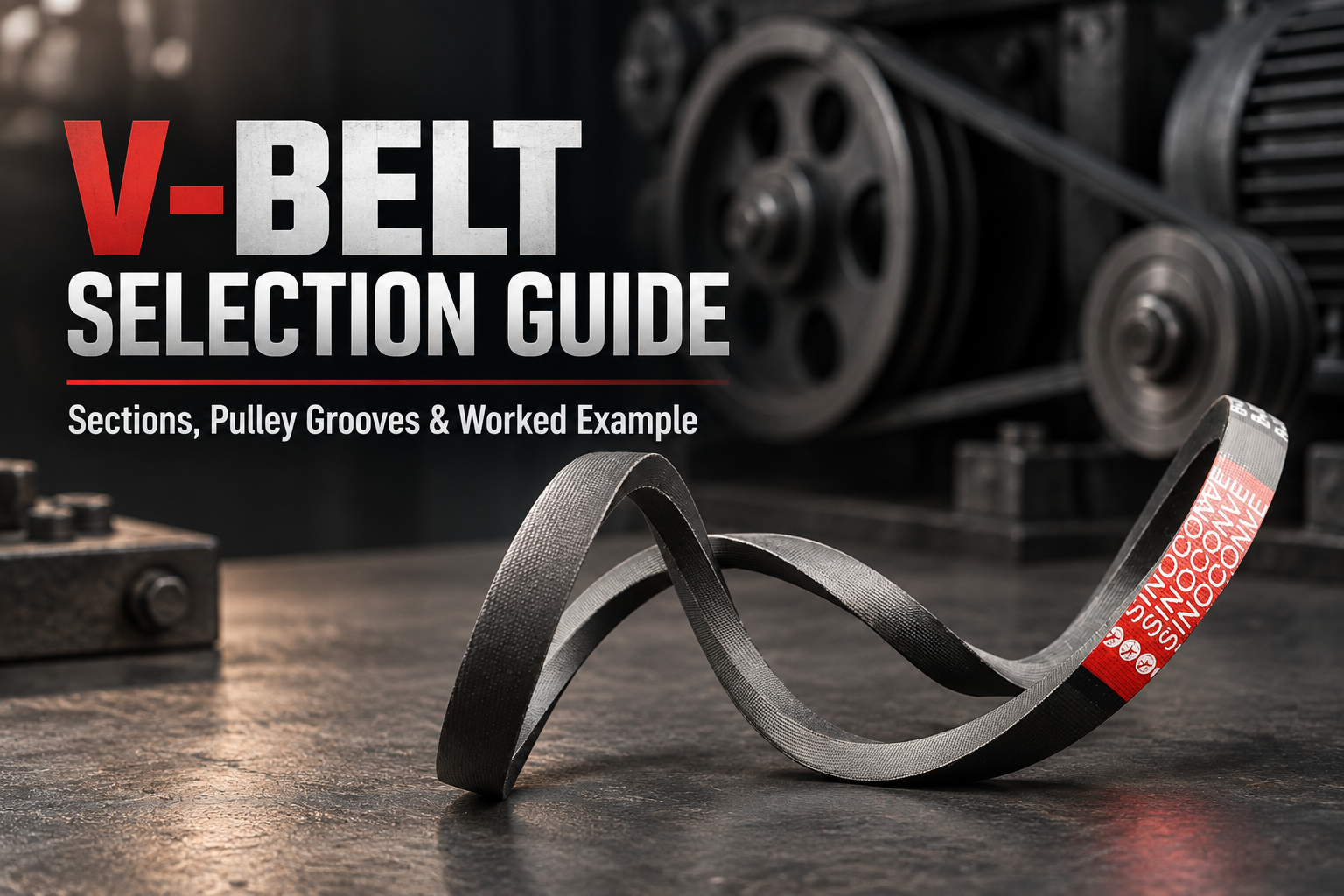
The wedge shape is the point. A v belt sits inside a matching pulley groove, and the sides of the belt carry the grip. It is not a toothed timing belt. It works by friction, fit, and proper tension.
In daily use, the same product may be called a transmission belt or a drive belt, especially in motors, pumps, compressors, fans, farm machines, and workshop equipment. The names overlap, but the pulley profile still decides whether the belt will run correctly.
Why Material and Construction Matter
A belt that looks ordinary from the outside can fail for very different reasons. The rubber body handles flexing and surface contact. The tensile cord controls stretch. The side surface takes most of the load inside the pulley groove.
Heat, oil mist, dust, frequent start-stop operation, and poor alignment all shorten belt life. A good transmission belt does not need to look special; it needs the right compound, cord strength, and profile for the drive.
TABLE: Main Parts of a V Belt
|
Part |
Role |
Buyer Check |
|
Rubber body |
Flexing and pulley grip |
Heat, oil, abrasion |
|
Tension cords |
Stretch control |
Cord strength and placement |
|
Side contact area |
Power transfer |
Groove fit and angle |
|
Outer surface |
Running protection |
Cracks, glazing, wear |
Common Applications
|
Application |
Why It Uses a V Belt |
|
Fans and blowers |
Simple drive, easy replacement |
|
Pumps |
Steady rotation in daily service |
|
Compressors |
Good grip under load changes |
|
Agricultural machinery |
Flexible layout, field repair |
|
Workshop machines |
Low-cost drive belt solution |
How to Choose the Right Belt
Start with the drive, not the brochure. Read the old belt code if it is still visible, then look at the pulleys. Shiny grooves, oil, chipped edges, or packed dust can make a new belt fail in the same way as the old one.
For replacement work, send the belt section, length, top width, quantity, and a photo of the pulley layout. If the machine has been modified, add load and speed details. Guessing from appearance alone is where many wrong orders begin.
Tension also needs a little respect. Too loose, and the belt slips and leaves black dust. Too tight, and bearings take the punishment. Neither problem is solved by choosing a stronger-looking belt.
V Belt vs Other Drive Belts
|
Belt Type |
Best Use |
Main Note |
|
V belt |
General pulley drives |
Good grip, simple maintenance |
|
Flat belt |
Light or long-distance drives |
Needs careful tracking |
|
Timing belt |
Synchronous motion |
Requires matched pulleys |
|
Multi-ribbed belt |
Compact automotive drives |
Several accessories in limited space |
Quality Points Buyers Should Check
Before confirming a batch, check the plain details: profile shape, length consistency, clean edges, cord position, and printed markings. One good sample means little if the next cartons vary.
For OEM or distributor orders, confirm packaging, code printing, tolerance, rubber compound, and batch consistency before production. If anti-static, oil-resistant, or abrasion-resistant performance is needed, put it in the order details instead of leaving it implied.
FAQ
Where is a v belt normally used?
On pulley drives such as fans, pumps, compressors, agricultural machines, and general workshop equipment.
Is a v belt a transmission belt?
Yes. A transmission belt is the wider category; a v belt is one common type inside that category.
Can it be called a drive belt?
In many purchasing lists, yes. Buyers often say drive belt when they mean the belt between a motor and a driven pulley.
Why does a v belt fail early?
Usually because of wrong size, worn pulley grooves, oil, poor alignment, or incorrect tension. Heat marks and rubber dust are useful warning signs.
Final Note
For regular industrial use, choose the belt after checking the drive, not only the price list. A few minutes spent on pulley condition, belt profile, and working environment is cheaper than replacing the same belt again after a short run.